
What we assess
A fire door survey is a visual inspection of all fire-resisting doors within a building. Our assessors examine each door for condition, compliance, correct installation and functionality.
This includes door leaves, frames, hardware, signage and intumescent protection. We assess each fire door in line with current British Standards and industry best practice, including BS 8214 and BS 9999.
Common checks include
- Condition of the door leaf
- Gaps around the door and frame
- Integrity of intumescent and smoke seals
- Door closers operating correctly
- Hinges and ironmongery condition
- Damage, warping or unauthorised modifications
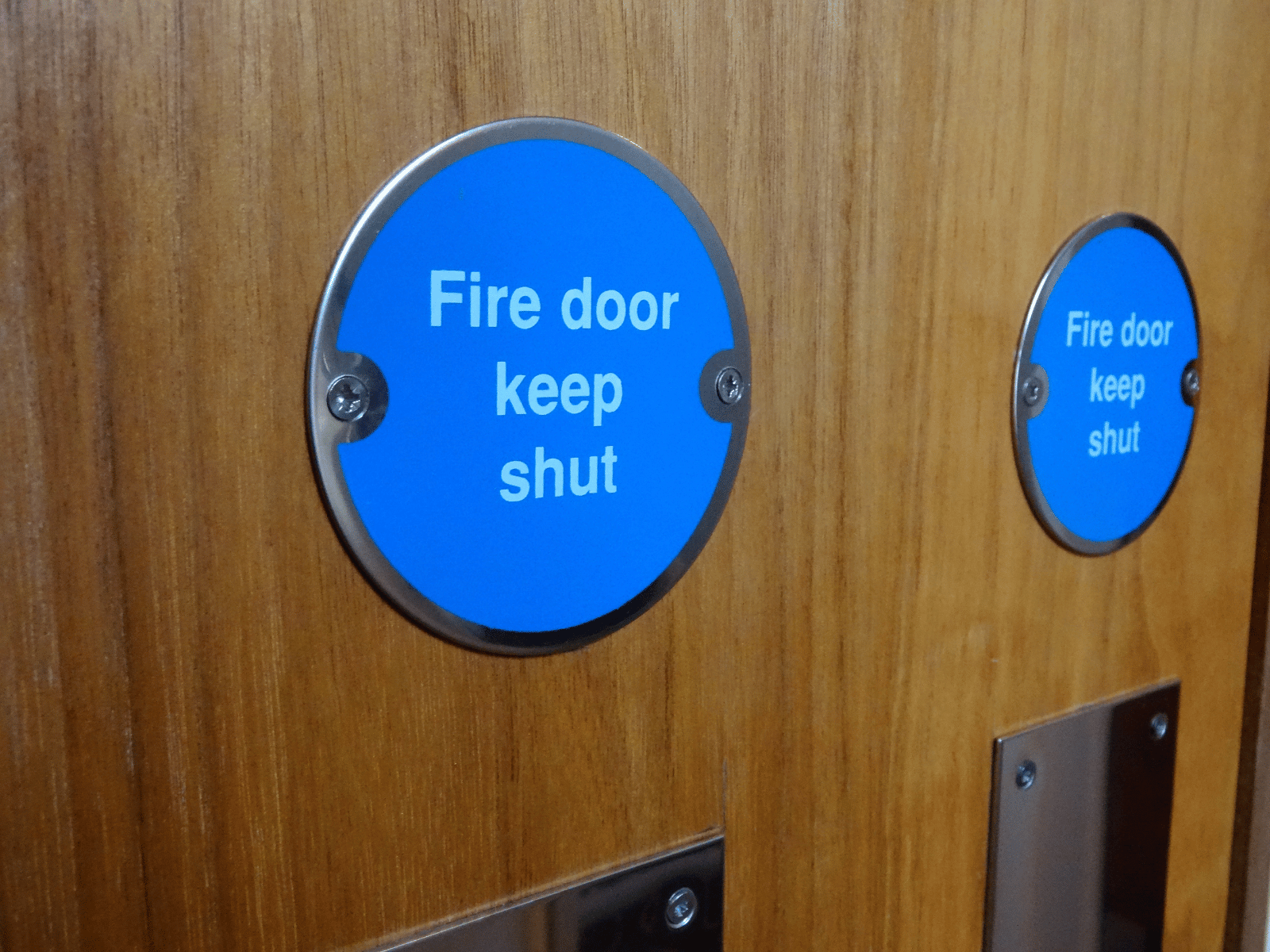
- Correct signage where required
- Evidence of certification where available
Higher-risk residential buildings
For multi-occupied residential buildings over 11 metres in height, the Fire Safety (England) Regulations 2022 introduced additional legal requirements.
Responsible Persons must carry out quarterly checks of fire doors in communal areas, make best endeavours to check flat entrance doors at least every 12 months, and arrange appropriate maintenance where defects are identified.
Life safety matters
The value of fire door surveys
Compartmentation depends on them
Fire doors slow the spread of fire and smoke, protect escape routes and give occupants more time to evacuate safely.
Small defects, large consequences
Worn seals, excessive gaps or a failed closer can prevent a certified door from performing as designed.
Demonstrable compliance
A documented survey gives responsible persons evidence that fire doors are being managed and maintained.
FAQs
Fire door surveys FAQs
What is a fire door survey?
A fire door survey is a visual inspection of fire-resisting doors within a building. We assess the condition, installation, compliance and operation of each door, including the door leaf, frame, hinges, closers, seals, glazing, signage and ironmongery. Our surveys follow relevant British Standards and industry best practice, including BS 8214 and BS 9999.
Why are fire door surveys important?
Fire doors help prevent fire and smoke from spreading between areas of a building. A survey can identify damaged doors, gaps, defective self-closing devices, worn seals, faulty hinges, obstructions or unauthorised alterations. Identifying these issues early helps protect occupants, maintain compartmentation and prioritise remedial work.
What are the legal requirements for fire door surveys in the UK?
The Responsible Person must ensure that fire doors are suitable, maintained and capable of operating correctly under the Regulatory Reform (Fire Safety) Order 2005.
For multi-occupied residential buildings in England where the top storey is above 11 metres, the Fire Safety (England) Regulations 2022 require communal fire doors to be checked at least every three months. Flat entrance fire doors must be checked at least every 12 months on a best-endeavours basis. These checks do not replace the need for a suitable fire risk assessment or proper maintenance.
Who is responsible for fire door maintenance?
Responsibility usually rests with the building’s Responsible Person. Depending on the building and its management arrangements, this may be the owner, landlord, managing agent, facilities manager or employer.
They must ensure that fire doors are inspected, maintained and repaired when faults are identified. Occupants should also report damage, avoid wedging doors open and must not interfere with self-closing devices.
How often should fire doors be surveyed?
Request a quote
Need help with fire safety or compliance?
Tell us about your building or project and we will advise on the fire safety consultancy or fire electrical support you need, and what you do not.
Get in touch
Tell us about your project
Send us the details and the right member of the team will come back to you with clear advice and a quote.
Looking for environmental services? Visit J.S.O Environmental