Construction Phase Fire Safety for Tariff Street High-Rise Development in Manchester


United Living appointed J.S.O Fire Safety Consultants to provide construction phase fire safety support for a new high-rise residential development on Tariff Street in Manchester city centre.

Our commission included the preparation of a construction-phase fire safety plan, an initial site-specific Fire Risk Assessment and planned return visits as construction progressed.

High-rise construction sites present a changing fire risk profile. Escape arrangements, compartmentation, temporary fire precautions, combustible materials and construction activities can all alter substantially throughout a build. The fire safety arrangements therefore needed to reflect the actual condition of the site at each stage of construction.

Project Overview

The Tariff Street project involved the construction of a new high-rise residential development in central Manchester.

United Living required specialist fire safety input during the construction phase to establish a structured approach to managing the temporary and evolving fire risks associated with the project.

Unlike a completed residential building, a construction site cannot necessarily rely on all of the permanent fire safety measures intended for the finished development. Fire-resisting construction may be incomplete, permanent alarm systems and other active measures may not yet be operational, escape routes can change and construction activities can introduce additional ignition and fuel sources.

The fire safety arrangements therefore needed to develop alongside the construction programme.

The Challenge

High-rise construction projects can introduce fire safety challenges that change considerably from one stage of the build to another.

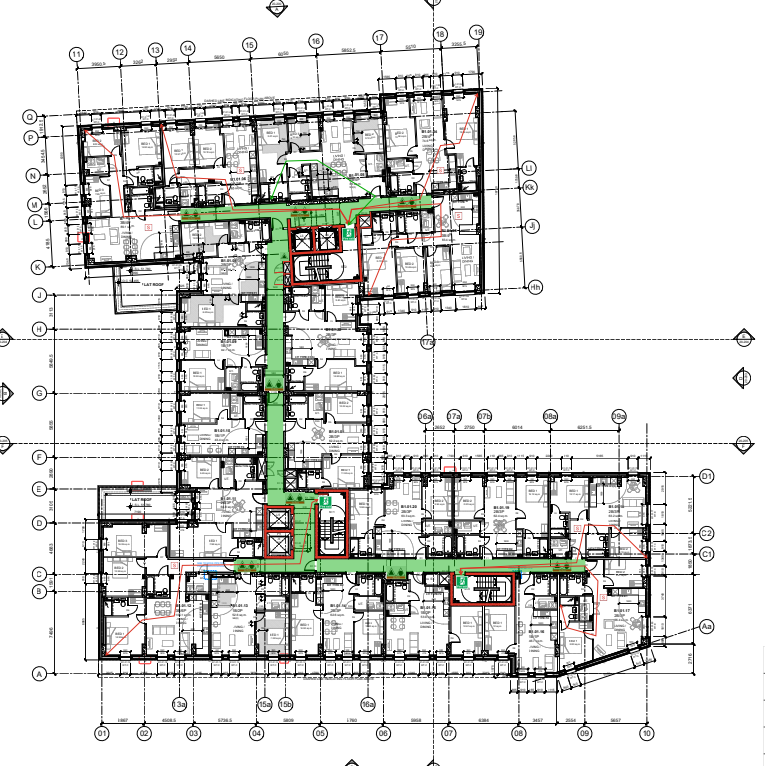
At Tariff Street, relevant considerations included temporary and changing means of escape, incomplete compartmentation and fire-stopping, hot works, storage of combustible materials and the provision of suitable temporary fire safety measures.

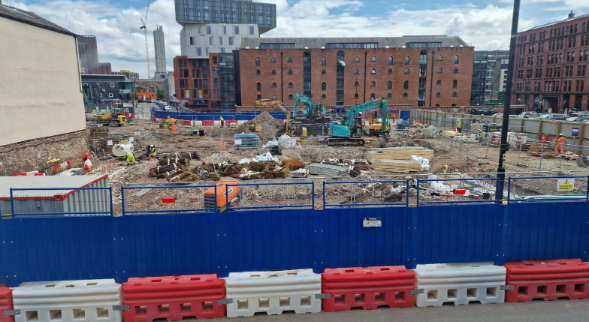
The city-centre location introduced additional logistical considerations. The site was surrounded by other developments and had restricted access, meaning inspections and fire safety reviews needed to be coordinated with the construction programme.

A fire risk assessment completed only at the beginning of the project would provide a snapshot of conditions at that particular time. As floors, internal layouts, services and construction activities developed, the risks and appropriate control measures could also change.

The project therefore required a fire safety plan capable of being reviewed and updated throughout the construction phase.

Our Approach

J.S.O prepared a construction-phase fire safety plan specifically for the Tariff Street development, supported by an initial site Fire Risk Assessment.

The approach considered the principles of HSG168: Fire Safety in Construction, the Health and Safety Executive guidance covering fire risk management throughout construction projects.

Our involvement included:

  • preparing the construction-phase fire safety plan;
  • carrying out the initial site fire risk assessment;
  • reviewing temporary means of escape;
  • considering fire hazards associated with construction activities;
  • reviewing the management and storage of combustible materials;
  • considering controls associated with hot works;
  • reviewing temporary fire safety precautions;
  • considering developing compartmentation and fire-stopping; and
  • returning to site at planned six-month intervals to review changing conditions and update the relevant documentation.

This provided the project team with a structured basis for reviewing fire safety as construction progressed rather than relying on arrangements established solely at the outset of the project.

Means of Escape During Construction

Maintaining suitable means of escape is a fundamental consideration on any construction site and is particularly important on a high-rise project.

Permanent corridors, stairways and circulation arrangements may not be available throughout every stage of the build. Temporary routes may also need to change as different parts of the development become active work areas.

The site fire risk assessment therefore considered the escape arrangements available at the relevant stage of construction and the need to maintain appropriate routes as the project developed.

Changes to construction activities or site layouts could then be reflected within subsequent fire safety reviews.

Temporary Fire Safety Measures

A building under construction may not yet benefit from all of the passive and active fire safety measures designed for the completed development.

Temporary provisions can therefore form an important part of managing fire risk during the works.

The assessment considered the temporary arrangements relevant to the site and how these needed to respond as the building progressed.

This type of construction-phase review complements J.S.O’s wider Fire Assurance service, which can provide independent construction-stage review of fire safety measures and supporting evidence as works develop.

Hot Works and Ignition Sources

Construction activities can introduce a range of potential ignition sources.

Hot works such as welding, cutting and grinding require particular consideration because heat and sparks can present an increased risk where combustible construction materials, packaging or waste are present.

The construction-phase fire safety arrangements therefore considered hot works and other potential ignition sources as part of the overall assessment of site fire risks.

Practical recommendations could then be incorporated into the project’s fire safety management arrangements.

Combustible Materials

Construction projects can accumulate significant quantities of combustible materials through deliveries, packaging, temporary protection, waste and materials awaiting installation.

The location and management of these materials can influence both the likelihood of fire and its potential development.

The fire risk assessment therefore considered combustible storage as part of the overall construction fire safety arrangements, allowing appropriate controls to be identified for the conditions present on site.

Compartmentation and Fire-Stopping

The passive fire protection measures intended for the completed building may only be partially implemented during construction.

Fire-resisting walls, floors, service penetrations and penetration seals can all be at different stages of completion across a large development.

The evolving condition of compartmentation and fire-stopping therefore formed part of the wider construction-phase fire safety considerations.

For existing buildings or projects where the condition and continuity of passive fire protection require dedicated investigation, J.S.O also provides Fire Compartmentation Surveys.

Ongoing Fire Risk Review

A central part of J.S.O’s commission was the planned return to site every six months.

These visits allowed site conditions to be reassessed as the development progressed and enabled the fire risk assessment and construction-phase documentation to be updated where required.

This was important because measures considered appropriate at one stage of construction may no longer reflect conditions several months later.

Changes to escape arrangements, construction activities, temporary precautions, combustible materials and the extent of completed fire-resisting construction could therefore be considered during subsequent reviews.

The approach created a live fire safety process rather than treating the initial FRA as a standalone document.

    The Solution

    The construction-phase fire safety plan provided United Living with a structured framework for managing the fire risks associated with the Tariff Street development.

    Combining an initial site assessment with planned periodic reviews allowed fire safety considerations to be aligned with the actual progress of the project.

    This provided a practical basis for reviewing temporary escape arrangements, construction-related ignition sources, combustible materials, developing compartmentation and other temporary fire safety measures as site conditions changed.

    Rather than relying on assumptions about the finished building, recommendations could be based on the conditions present during the construction phase.

    For developments at an earlier stage, J.S.O can also provide a Pre-Construction Fire Safety Review to identify potential fire safety issues before works commence.

    The Outcome

    J.S.O’s involvement provided United Living with an adaptable approach to construction phase fire safety on a major high-rise residential development.

    The project received a dedicated construction-phase fire safety plan, an initial site fire risk assessment, practical recommendations appropriate to the construction environment and planned six-monthly reviews as the development progressed.

    This allowed the project’s fire safety documentation to reflect changing site conditions and provided the project team with a clearer basis for identifying and managing developing fire risks.

    The Tariff Street project demonstrates why construction fire safety should be treated as an evolving process, particularly on high-rise developments where the building, working environment and available fire precautions can change significantly over the course of the programme.

    Construction Phase Fire Safety Support Across the UK

    J.S.O Fire Safety Consultants provides fire safety support to developers, contractors and project teams throughout Manchester and across the UK.

    Our services include Fire Risk Assessments, Pre-Construction Fire Safety Reviews, Fire Assurance, Fire Compartmentation Surveys and Fire Strategy Plans and Fire Engineering.

    If you are planning a high-rise development, refurbishment or other construction project and require specialist construction-phase fire safety support, contact J.S.O Fire Safety Consultants to discuss your project.