Fire Risk Assessments, Compartmentation Surveys and Fire Door Surveys for 30 Care Homes
J.S.O Fire Safety Consultants was appointed by Allied Care to deliver a coordinated fire safety survey programme across 30 occupied care homes located along the South Coast.
The commission combined Fire Risk Assessments, Fire Compartmentation Surveys and Fire Door Surveys across the full property portfolio.
The programme had to be completed within a demanding six-week timeframe while every care home remained fully occupied and operational. This required careful logistics, disciplined survey planning and a practical approach to working around residents, staff and day-to-day care activities.
The result was a portfolio-wide view of fire risk, passive fire protection and fire door condition across Allied Care’s assets.
Project Overview
The project covered 30 care homes across the South Coast, all of which remained occupied throughout the survey programme.
J.S.O was tasked with undertaking three principal workstreams across the portfolio:
- fire risk assessments;
- compartmentation surveys; and
- fire door surveys.
The objective was to provide Allied Care with consistent, property-specific information across all 30 homes so that the organisation could better understand the condition of its fire safety arrangements and plan future remedial and maintenance activity on an informed basis.
For a multi-site care provider, this type of coordinated programme offers an important advantage over individual standalone surveys because it allows findings to be considered across the estate as a whole.
The Challenge
The scale of the programme was significant in itself, but the principal challenge was the delivery period.
All 30 care homes had to be surveyed within six weeks.
This meant assessor availability, travel, site sequencing and reporting needed to be carefully coordinated from the outset. The properties were spread across the South Coast, so inefficient scheduling could quickly have affected the programme.
The surveys also had to be completed in fully operational care environments.
Care homes present different practical considerations from vacant commercial buildings. Residents may be present throughout bedrooms, lounges and circulation areas, while staff must continue providing care without unnecessary disruption.
Surveyors therefore had to work around normal operations and communicate appropriately with staff and residents while still obtaining the access required to complete the assessments.
Some residents were comfortable with the survey activity and interaction with the assessment team, while others were understandably less receptive to unfamiliar people entering or inspecting areas around them.
This required assessors to remain patient, professional and adaptable throughout the programme.
Coordinating a 30-Site Survey Programme
Completing three different fire safety workstreams across 30 occupied properties within six weeks required a structured approach to logistics.
Site visits had to be grouped and sequenced to minimise unnecessary travel while ensuring the programme remained achievable.
The assessment team also needed to coordinate with individual homes regarding access arrangements and operational requirements.
Where possible, the surveys were planned so that multiple aspects of the fire safety assessment could be considered during the same visit, improving efficiency while maintaining the separation between the different survey scopes.
This was particularly important because the Fire Risk Assessments, compartmentation surveys and Fire Door Surveys each examine different aspects of fire safety but collectively provide a much broader understanding of the building.
Fire Risk Assessments
A fire risk assessment provides an overall review of the fire hazards, people at risk and fire precautions within a premises.
Across the Allied Care portfolio, J.S.O assessed each home individually to identify the fire safety risks and existing control measures relevant to that building.
The assessments considered matters such as:
- potential fire hazards;
- means of escape;
- fire detection and warning;
- emergency arrangements;
- fire safety management;
- protection of escape routes;
- relevant passive fire protection; and
- actions required to reduce or manage identified risks.
The Regulatory Reform (Fire Safety) Order 2005 requires the Responsible Person to ensure that a suitable and sufficient fire risk assessment is carried out and kept under review.
In care environments, the assessment is particularly important because evacuation may involve residents who require assistance and because operational arrangements can be more complex than in many conventional workplaces.
Fire Compartmentation Surveys
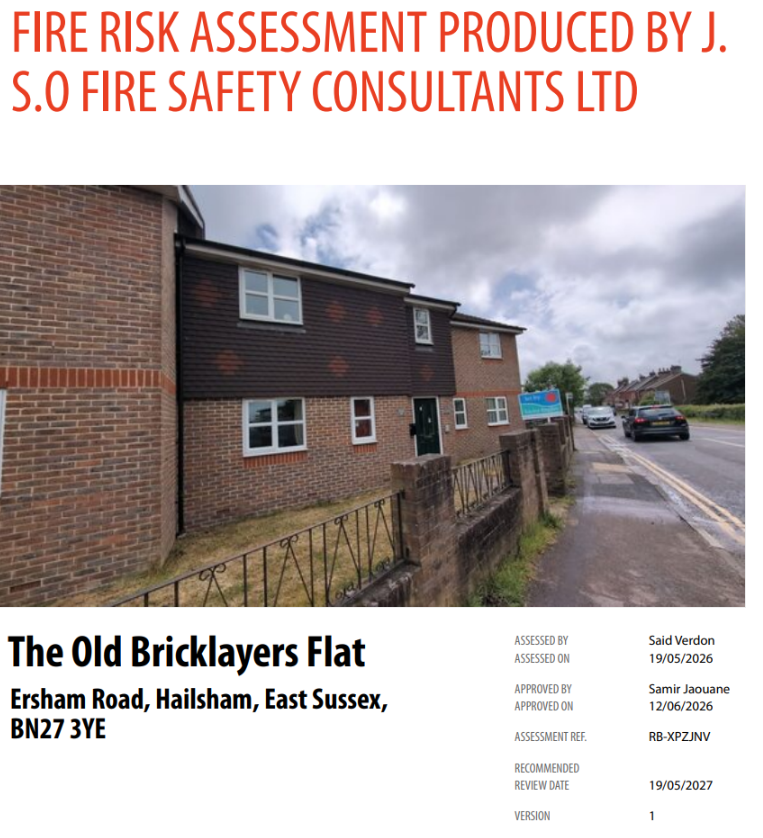
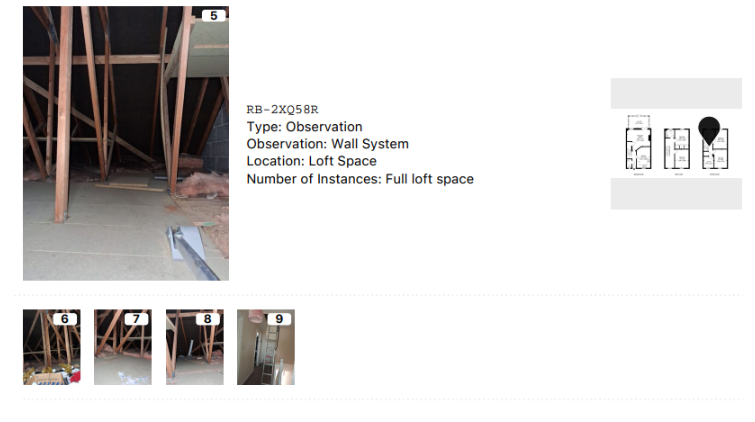
The compartmentation surveys examined the visible condition and continuity of fire-resisting construction within each home.
Compartmentation is intended to limit the spread of fire and smoke through a building and forms an important part of the overall fire safety arrangements within care environments.
The surveys considered accessible fire-resisting walls, floors and service penetrations and identified visible defects where the integrity of the fire-resisting construction could potentially be compromised.
Typical issues that a compartmentation survey may identify include:
- unsealed service penetrations;
- damaged or incomplete fire-stopping;
- gaps at wall heads;
- inappropriate materials used around penetrations;
- alterations affecting compartment lines; and
- defects that may allow fire or smoke to pass between areas.
The purpose of the surveys was not simply to produce a list of individual defects, but to provide Allied Care with a clearer understanding of where passive fire protection issues existed across its portfolio.
Fire Door Surveys
J.S.O also carried out Fire Door Surveys across the 30 homes.
Fire doors are a critical part of the passive fire protection arrangement within many care settings because they support compartmentation and protect escape routes.
The surveys considered relevant components of each doorset, including:
- door leaves and frames;
- gaps;
- hinges;
- self-closing devices;
- intumescent and smoke seals;
- glazing where present;
- ironmongery; and
- the overall operation and condition of the door.
The findings gave Allied Care a property-specific record of fire door condition and any identified repair, maintenance or replacement requirements.
This was particularly valuable when considered alongside the compartmentation findings because both workstreams relate to the integrity of passive fire protection.
Working in Occupied Care Homes
One of the most important practical aspects of the commission was how the surveys were carried out.
Every property remained occupied.
The assessment team therefore needed to complete detailed inspections while respecting the needs of residents and avoiding unnecessary disruption to staff.
This required assessors to adapt to the environment rather than treating the properties as conventional survey sites.
Bedrooms and communal spaces could not simply be treated as unrestricted work areas. Access often depended on the circumstances within the home at that particular time.
Clear communication with site staff was therefore essential.
The assessors also had to exercise judgement around resident interaction. Some residents were comfortable engaging with the survey team, while others were less welcoming or preferred not to be disturbed.
Maintaining professionalism and progressing the surveys sensitively was an important part of completing the programme successfully.
Consistency Across the Portfolio
A major advantage of a coordinated portfolio programme is consistency.
Using the same consultancy across the 30 homes allowed the findings to be recorded through a consistent assessment approach.
This made it easier for Allied Care to compare properties and understand recurring issues across the wider estate.
Rather than receiving isolated reports produced using different methodologies, the client gained a more coherent picture of:
- fire risk across individual homes;
- the condition of compartmentation;
- the condition of fire doors;
- recurring defects;
- property-specific priorities; and
- the broader condition of fire safety measures across the estate.
This type of information can help inform maintenance planning and future capital expenditure by allowing organisations to prioritise work based on the findings across the whole property portfolio.
The Outcome
J.S.O completed the fire safety survey programme across 30 occupied care homes within the required six-week timeframe.
The completed assessments gave Allied Care a much clearer overview of the fire safety condition of its assets.
For each property, the organisation received information relating to fire risk, passive fire compartmentation and fire door condition.
At portfolio level, this provided Allied Care with a structured basis for understanding where issues existed and where remedial or maintenance work may need to be prioritised.
The project also gave the client greater visibility across a geographically dispersed estate rather than relying on fragmented or inconsistent information from individual properties.
The combination of Fire Risk Assessments, compartmentation surveys and Fire Door Surveys allowed the portfolio to be considered from both an operational fire risk and passive fire protection perspective.
Fire Safety Surveys for Care Home Portfolios
Managing fire safety across multiple care homes requires more than completing isolated compliance surveys.
Portfolio owners and operators need consistent information that allows risks and defects to be compared across different properties and prioritised at estate level.
J.S.O Fire Safety Consultants provides coordinated fire safety programmes for care providers, housing organisations, property groups and other multi-site clients across the UK.
Our services include Fire Risk Assessments, Fire Door Surveys, fire compartmentation surveys and wider fire safety consultancy.
If you manage a portfolio of care homes or other occupied properties and require a coordinated programme of fire safety assessments, contact J.S.O Fire Safety Consultants to discuss your requirements.